Sunday, December 23, 2012

Rituals of Bereavement


As the time is catching up on us, we hear of death more often than before. It is either someone we know or a close one of someone we know. I am used to condolences. It is a part of my business dealing with cancer. In our office one death is often a premonition of another two. They usually leave us three at a time.

Even then, when in the last month I attended six mournful gatherings, it was more than a fare share, all things considered. 

First there was the demise of Dr Riaz Chaudhary's (Pulmonologist) mother-in-law. She passed away in Baltimore and buried in Upstate NY. We drove to Newburgh for a fatiha and qurankhwani. 

Weeks later mother of Dr Shaukat Hussain (Neurologist) suddenly died in Long Island. Janaza was at Masjid Hamza in Valley Stream. He was kind enough to take care of my dying father eighteen years back. His son, a medical student is one of the Huffaz who lead the taraweeh  prayers at ICLI. 

Weeks later Dr Abdul Majeed's (Pulmonologist) sister died after a prolonged illness. She was like on of the sisters many of us have who took care of you when you arrived in a strange land and took you into their arms. Janaza was at ICLI Long Island. 

Within a week was the death of Abdul Hamid's (Shaheen Sweets) wife, Janaza was at Bait uz Zafar

Then the mother of Dr Iqbal Jangda (psychiatrist) passed away in Karachi. He flew to Pakistan, stayed there for one and a half days to attend the soyem and came back to have quran khwani at ICLI. 

Lastly mother of Dr Askari Jaffry (Internist) Risalat Fatima passed away in Connecticut. Janaza and quran khawani was at Khoi Center in Jamaica, NY. Askari is the youngest of the brothers. All very active in the community from Westchester to Connecticut. His elder brother Shaukat Jaffri is  known to many. Askari is Zoha's class mate from Dow and is married to the daughter of a close family friend of ours, Dr Nasir Zaidi. 

These deaths and their related events or rituals took me to peoples homes and their houses of worships. I went to three different mosques, sunni, ahmadi and shia. Although the basic ingredient of a mournful gathering is recitation of Quran in some form or another, people do other rituals in different ways. The most engaging and riveting one was the celebration of death at the Khoi Center. It was the soyem event, started with recitation of Quran by participants. Then there was the prayers, maghrabain. Striking difference in communal prayer was that the Imam said the whole prayers loudly, including the sentences and phrases during prostration and sitting, but did stay silent during the qayyam of the last two rakats. 

After the prayers, there was a sitting session, which started with the recitation of Chapter Yaseen and then a prayer for the deceased. 

And then there was poetry. The whole session was devoted to the subject of motherhood. Four poets recited their poetry in Urdu. It was quite touching, given the relevance of the occasion. It was followed by salaam and a speech by an orator. 

Shia's recipe of grief management is to overlap the grief at hand with the tragedy of Karbala. It helps one express grief profusely and thus it becomes therapeutic. 

All these six deaths I mention were of individuals who had lived a full and rich life. They had seen their near and dear ones grow up and be successful in their own right. Deaths are to be mourned and that is what we do to help each other go through these tough times. But the pain of these deaths to their survivors pale in comparison the massacre of elementary school children in Connecticut. Those nascent lives, full of dreams and hopes were mercilessly and senselessly cut short.

It was during one of the dirges of Karbala when the slaughter of children was lamented that I could make the connection with the death of innocence in Newtown Connecticut. I could not stop being teary eyed. 

Rituals is not a bad word after all.
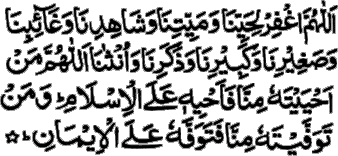

Oh Lord!
Let be forgiven the Alive and the Deceased
The Present and the Absent
The Young and the Adults
The Men and the Women.
Let the Living live at Peace
And the Dying die with Faith

Friday, December 14, 2012

Prayers In An Ahmadi Mosque


Unless one came to the United States in the last five years, it is hard to think that one does not know about Shaheen Sweets. It started as a small shop in Lexington Avenue in Manhattan in 1973. Then it had an exponential rise. By the time I came here in 1988, it was almost on its zenith. There was a sweet factory on Broadway in Jackson Heights, along with another restaurant in the area and the sweets were shipped all across the USA and Canada. Once I was in LA in an Indian grocery store and the only mithaee was of Shaheen. Later it had a slow decline when many competitions arrived, both Pakistani and Indian, and later Bangla Deshi. Now the Manhattan restaurant is gone, one in Jackson Heights is closed and the other is only a sideshow of sweets with the main food service by Dera restaurant. The founder, Abdul Hamid had retired and the sons presumably went their own ways. One moved to Baltimore. One grandson Zeeshan, opened a shop in Hicksville Long Island. That is close to our home and if food at our home is catered from outside, most of the time it is from there.

On Dec 11th, Naseer Sahib, the lifetime loyal of Shaheen informed me about the passing away of Zeeshan's grandmother and of the funeral the day after next, in the middle of the day,  I made necessary arrangements to be there.

So on December the 13th, I entered an Ahmadi place of worship for the first time in my life. Growing up we always had Ahmadi friends. Many a time due to my father's liberal interaction with anyone who was interested in talking, we had Ahamdi enthusiasts working overtime to convert him. I think he visited Qadian a few times in his early life. I grew up reading left over copies of Al Fazl newspaper all the times. But I never went to an Ahmadi mosque until now. 

Sometime during the gradual tightening of the noose on Ahmadi way of life in Gen Zia's time they were disallowed to use the word Masjid for their places of worship. So all of their  masajid were renamed as Bait. Perhaps they got so much used to it that they now call the masjid here in NY as bait; perhaps a way to distinguish themselves.

I had seen the place from outside all the times. It is on my way home. A friend of mine had told me months back that Ahmadis have bought a big place just off the Grand Central Parkway on 188th street. It is named Bait uz Zafar, named after the first Foreign Minister of Pakistan. Apart from being the most famous Ahmadi in Pakistan Movement, he has other claims to have a place of worship named after him. He has translated Quran in English and it a pretty good translation.

It is a converted place, perhaps a school or a church. Quite spacious for NY, and in the middle of a thriving neighborhood. A very prominent place. The entrance is very visitor friendly and has information on the Ahmadi creed on the walls. The display is pretty impressive with many translations of Quran by Ahmadis in various languages. The main hall is a divided auditorium, front for men and rear for women. 

It seems like that Ahmadis have more of an emphasis to have the head covered, for men. Not that much emphasis on the beard, however. Most of the bearded persons have beard like me, less than half an inch. I remember in old days it was called the  ahmadi dhaari.  People of recognized responsibility don the qaraquli cap, and most of the rest have some sort of a head gear. The pictures of all the leaders in the hallway had either qaraquli caps or the turbans, once make popular by their founder. I remember Dr Abdus Salam wearing that type of turban when accepting the Nobel prize.

The actual funeral was preceded by Zuhr Prayers. The azaan was the same as what I had heard all my life. Not that much emphasis on the melody of recitation. The imam who led the prayer was a traveler and led the prayer in the familiar way. All the rituals were like I have grown up with. In fact some of the other sects have somewhat different rituals and one is sometimes not sure how to follow, but not here. Most of the nonahmadi's like me prayed behind the imam. expect a few. Many of us Non Ahmadis were either trying to establish an eye contact with each other or actively trying to avoid that. In the end most of us did blend in. 

Imam had informed the congregation that he was a traveler and he will only pray for two rakats and the locals should continue the rest of the prayer on their own. That is the way it happens all the times. Somehow most of the congregation did finish the prayer with him, and joined him again for the two kasr for Asar prayers. Perhaps most were travelers like the Imam. 

The janaza prayer was also exactly the same as the sunni prayer. Although it is silent, but the Imam was mouthing the words in a big whisper ( as sometimes they do to guide the congregation on what to recite) and it was of the same sequence ie subhanakallahuma/darood/allahuma agfir-- and without the alhamd.

There was however no communal prayer at the end of the namaz or the janaza, like raising hands and offering supplications. 

Noticeable exception was that the women did not line up for the janaza. It may not be a creed thing. and perhaps the culture of a particular mosque. In our masjid  at ICLI, women do line up for funeral, if they desire so.

All things considered, it was not much different than any other funeral I attend. Somehow funerals and memorials have increasingly become a part of social calender, perhaps a factor of our age as a community. Going in I had cautious skepticism, coming out I felt somewhat good about being there.

Somehow I felt writing about it.

Sunday, November 25, 2012

Last Stanza #197/Yadgaar Marsia Mir Anees


Dear All:

Thanks to all who read and responded to the posts in this series.

The events of Karbala continue to exert a strong effect on many to this date, myself included.

Historic accounts vary and are subject to revisions and reinterpretations. 

I think the message of standing up to the tyranny is what resonates with most and is the reason for its everlasting legacy.


All the verses I quoted are from Mir Anees's work.

Thanks to the seminal work by Dr Syed Taghi Abidi, I was fortunate enough to benefit from this masterpiece.


I leave you with the last stanza of this 'Yadgaar Marsia" of Mir Anees.


بس ! اے انیس! ضعف سے لرزاں ہے بند بند
عالم میں یادگار رہیں گے ، یہ چند بند


نکلے قلم سے ضعف میں کیا کیا بلند بند
عالم پسند لفظ ہیں، سلطاں پسند بند
------------


 یہ فصل، اور یہ بزم عزا ، یادگار ہے
پیری  کے ولولے ہیں، خزاں کی بہار ہے

----------------------
References for the rest of the blogposts: Most of them are shia-centric.


Saturday, November 24, 2012

Muharram 10th, 61 AH/ شام غریباں


 شام غریباں


Tradition has it, that Hussain had worn the robe what Prophet had on the night of Miraaj


معراج میں رسول نے پہنا تھا جو لباس
 کشتی میں لائیں زینب اُسے شاہ دین کے پاس


سر پر رکھا عمامہ سر دار حق شناس
پہنی قباے پاک رسول فلک اساس
---------------------------------


بر میں درست و چست تھا جامہ رسول کا
رومال فاطمہ کا عمامہ رسول کا 
----------------------

Tradition has it;

The day started by the call to prayer by Ali Akbar.

Hussain's supporters insisted on first to fight. By noon, many were gone. 

The first one to die was the same Hur, who stopped Hussain in Karbala, now had changed sides overnight.

Then Ali Akbar, Abbas and the rest of the immediate family.

The last one to be killed before Hussain was the infant Ali Ashgar.

And then Hussain. 


آے حسین یوں کے عقاب آے جس طرح
کافر پہ کبریا کا عتاب آے جس طرح


تابندہ برق سوے سحاب آے جس طرح
دوڑا فرس نشیب میں آب آے جس طرح


یوں تیغ کوند گئی اس گروہ پر
بجلی تڑپ کے گرتی ہے جس طرح کوہ پر


---------------------------
And then the shaam-e-ghareebaan!!


How shall we sing the Lord's song in a strange land


جنگل سے آئ فاطمہ زہرا کی یہ صدا
 !امت نے مجھہ کو لوٹ لیا یا محمدا


اس وقت کون حق محبت کرے ادا
ہے ہے یہ  ظلم! اور دو عالم کا مقتدا 


انیس سو ہیں زخم تن چاک چاک پر 
زینب نکل! حسین تڑپتا ہے خاک پر   
---------------------


گھر لوٹنے کو آے گی اب فوج نابکار
کہیو نہ کچھ زباں سے بجز شکر کردگار


خیمے میں جب کہ آگ لگا دیں ستم شعار
رہیو مری یتیم سکینہ سے ہوشیار


بیزار ہے وو خستہ جگر اپنی جاں سے
باندھے نہ کوئی اس کا گلا ریسمان  سے


-----------------------------------
https://www.brooklynmuseum.org/opencollection/objects/3054/Battle_of_Karbala

Muharram 9th, 61 AH, The Last Night

Tradition has it:


In the afternoon, Kufan army moved in a formation to attack. Hussain sent Abbas and Ali Akbar for the delay of one night to pray.


Hussain relieved his companions from the oath of allegiance and allowed them to leave who ever wanted to leave by putting off the candles. 


When candles were lit again, no one had left.


کچھ مشورہ کریں جو شہنشاہ خوش خصال

ہم بھی محق ہیں آپ کو اسکا رہے خیال


پاس ادب سے عرض کی ہم کو نہیں مجال

اس کا بھی خوف ہے کہ نہ ہو آپ کو ملال
------


آقا کے ہم غلام ہیں  اور جاں نثار ہیں

عزت طلب ہیں ،نام کے امید وار  ہیں
--

Friday, November 23, 2012

Happy Thanksgiving 2012


The roots of Thanksgiving notwithstanding,

We have this tradition for quite a few years now, as the children have grown, to have the Thanksgiving Day as a day of culinary catharsis. All the children, our kids and their cousins and friends, make a dish individually or collectively and share it with all. Most of them worked into the long hours of night before. 

It has evolved into an energized effort by the kids to engage. 

We had food, very eclectic, followed by a prayer and comment session. Everybody spoke what they thought they were thankful of, and prayed for the passed on souls, including my father who passed on 18 years back this week. 

And in the end was, as their is always, a birthday cake for one of the cousins.

Here is the (almost) complete menu:

Appetizer:
  • Chips and Salsa
  • Spanakopita (Haleema)
  • Mushroom and nut pate with crackers and celery/carrot sticks (Ali Bhai)
  • Dip/salsa (Bhabhi)
Entree:
  • Whole Roast Turkey (Ben's Kosher)
  • Savory Stuffing & Gravy
  • Vegetable Rice ( Nani)
  • Chicken Salan (Nani)
  • Bhindi (Gohar)
  • Mac’n’Cheese (Anam and Ahmad’s Joint)
  • Pasta with Pumpkin Parmesan Sauce (Faria)
  • Mushroom Risotto and Seafood Risotto (Ali Bhai)
Side Dishes:
  • Mashed Potatoes
  • String Beans Almondine
Accompanied with:
  • Cranberry-Pineapple Compote
  • Fresh-Cut Coleslaw
  • Assorted Relish Tray
Dessert
  • Pumpkin Pie
  • Kheer (Zoha)
  • Gluten Free Chocolate Cupcakes (Haleema and Saleem)
  • Chocolate Chip Cookies (Andalus)
  • Oreo Cheesecake Cupcake (Faria and Sobaata)
  • Gluten free pumpkin chocolate cake (Bhabhi)
  • Chocolate Mouse Cake (Cardinelli)

Tea


Muharram 8th 61 AH


And by the 8th there was no water left in the camp.


غربت میں پڑ گئی ہے مصیبت حسین پر
فاقہ یہ تیسرا ہے مرے نور  عین پر


--------


وہ لو ، وہ آفتاب کی حدت ، وہ تاب و تب
کالا تھا رنگ دھوپ سے دن کا مثال شب


خود نہر علقمہ کے بھی سوکھے ہوے تھے لب
خیمے جو تھے حبابوں کے تپتے تھے سب کے سب


اُڑتی تھی خاک ،خشک تھا چشمہ حیات کا
کھولا ہوا تھا دھوپ سے پانی فرات کا