Thursday, October 7, 2021

قید ‏یاغستان/Qaid ‎e ‎Yagistan


I just finished reading the book Qaid e Yagistan again. I stumbled on in on my recent visit to Pakistan. I made a special trip to Jhelum Book Corner to get a book for a friend of mine. It is an amazing bookstore, by the way. I recommend it to everyone who can stop over on a road trip between Rawalpindi and Lahore. It is next to Yadgar Chowk in Jhelum. (I hail from District Jhelum but never lived in the city).

I read the book for the first time when I was in high school in mid seventies.. A chapter of it entitled “Yagistan say wapsi’ was in our syllabus. We had the book at home.

The book was a household name in those days. It reads like a suspense novel, a mesmerizing account of a young government official, 23 years of age, in the remote parts of the then- British India’s NWFP. In 1910, he was kidnapped on gunpoint for ransom and taken away across the mountains to Khost in Afghanistan. It is the account of those 45 days of captivity and the escape. In a very poetic way, and the prose sprinkled with Urdu and Persian verses, he describes his abduction, the journey on foot as a captive, along with his kidnappers, avoiding daylight and population, to finally reach the area out of British control. The story goes on how he is treated by the captors, the ransom and its negotiations, dealing with different characters in the village including Naik Namay a lady who develops a soft corner for him (and vice versa) , and finally how he runs away along with his fellow captive Lala Sunder Lal.

Mohammad Akram Siddiqui had engineering education from Mayo college of Arts (now NCA Lahore) and was an employee of MES (Military Engineering Service).  He was posted in District Bannu in the Tochi area. On that fateful day he was travelling back to Bannu from Miranshah in a private Tumtum with the contractor Lala Sunder Lal, as he missed the official Dak Tanga. They see the security detail on mountain tops retiring as a European passenger crosses their path, noting the extra protection to White officials but not for Desi personnel. They drop a lucky fellow traveler along the way. As soon they turn a fateful corner they are ambushed and kidnapped at gunpoint.

The horse carriage is abandoned along with the horses. It is too much to take them along a long journey. The carriage driver is let go after a little while, not because he is a fellow Pashtun but because he has no money.

It is a thriller. The negotiations fail, partly because his own family does not have the money being asked for and his employer, the British Raj is interested in getting him freed for free through negotiations with Afghan Government. Under pressure for the Afghan government, the captors are advised by the profit sharing intermediaries to ‘get rid’ of the captives. He hears the decision which is essentially their death sentence. That is when they decide to run away, a plan they had been hatching for a while.

They are able to get rid of their chains and run away in darkness. They get separated and reach safe haven through different paths. He does not get the kind of response he expected from the British masters. The highest ranking British officer Mr. Donald (Later Sir John Stuart Donald, Chief Commissioner of NWFP) gave just ten rupees and when Mr Akram declined to accept that, gave another ten rupees.

The language in the book, written in around 1912 for the first time and had several editions, may not be very politically current in so many ways. It uses the term Pathan which is now considered improper. Some characterization of certain communities are mentioned as 'facts'.

He is very well aware of the culture and draws a very clear line trying to avoid the prejudices one would have easily fallen to. He describes these farraris (fugitives) who had ‘run away’ from the British controlled homeland and adopted the ‘profession’ of abduction. Their targets were either British nationals, their employees (irrespective of their religion, Hindu or Muslim) and Non-Muslims. These farraris, outlaws, considered it sanctioned by their religion to do that. They did make a distinction not to abduct the Muslims who were not servants of the British Raj. At the same time, they abided by a certain standard of chivalry, taking care of the human needs of their captives and their religious concerns. They did torture the captives to make sure that the news reached their relatives and prompted an eagerness to come up with ransom.

There is very literary description of the individuals, the captors and all other players, the scenes, the emotions, and the drama of the story.

In the Zinda Kitabain edition, published last year, there are a few appendices. There is a long article by the author’s daughter, about the life of Mr Siddiqui. It tells us about the man behind the book in a larger way than the episode which defined his life.  He quitted the job after a while; he was dismayed at the response of the British Raj to his abduction and wanted to leave earlier than that. He had a successful life as a construction magnate in Lahore Cantonment. He built and owned many buildings including the one Rahat Building, now home of the famous Rahat Bakery, for example. He was involved in the Pakistan Movement at local level.

There is additional chapter of his later-in-life-travel to the same area, in 1960’s. It was nostalgic, but he felt depressed that the culture of abductions and ransom had not gone away with Independence but continued and now fellow Muslims, and sometimes even females, were the targets; as the non-Muslim rulers and their non-Muslim subjects have gone away.

I feel a close personal connection with the story. It could very well have been my grandfather, or his sons, including my father. The author is about the age of my grandfather, a few years younger. My grandfather was a mid-level employee in British Raj and served in Rawalpindi and Murree. My uncle had served as a lecturer in Islamia College Peshawar and later as a Principal in Bannu and Mardan. My father was working in Military Accounts in Razmak at the time of Partition. I have lived early part of my life in Abbottabad, Kohat and Nowshera. I travelled uncountable times through Dara Adam Khel, the famous firearms producing tribal agency between Kohat and Peshawar in my early life.

Much had changed since 1910, but still not that much when I was growing up. People were still abducted for ransom and taken to the areas which are not under direct control of the government.  One of my elementary school classmate was kidnapped while I was a fifth or sixth grader.

 All said, the book reading was nostalgic to me. It took me back in time, to my childhood and to the times and places of of my elders.

Thanks to the Atlantis Publications and Zinda Kitabain series for the revival of this classic.


Sunday, September 26, 2021

shaami sooraj lukna ay

audio file 


اک غزل

شامی سورج لُکنا اے
چڑھدے ہوئے نیں ڈبنا اے

جس دن ساہ نے رکنا اے
اے رولا وی ُمکنا اے

لٹے پٹے اپڑے آں
ہون تو  پُٹ جو ُپٹنا اے

جس نوں ویلے سر نہ چنیا
اوس پھلڑی نیں سکنا اے

جنی وی بھروائی کر
ایس کندی نے ٹٹنا اے

اج جس مونڈے چکیا  اے
کل اوسی نے سٹنا اے

لٹیا ونڈ شریکاں نیں
ہون سائیاں نیں لٹنا اے

ناصر گوندل
ؒحلقہ اربابِ ذوق، نیو یارک
اتوار26/ستمبر2021

Saturday, August 28, 2021

A Piece of Me/Arif Ahmad


I just finished reading "A Piece of Me" by Arif Ahmad.

I know Arif through APPNA. This is one of the blessings of the organization where one finds fellow Pakistanis whom you would not have met otherwise. They are neither living in the same town as yours, nor came from the same place back home. They did not attend the same medical college nor were they trained with you here in the USA.

Later on I found that he was a classmate of one of my cousins in high school in Lahore, and that he was trained in Milwaukee with another cousin of mine.

His book is 'an arrangement of words'. Essentially it is a journey most of us in our age group have taken, migrating from an increasing intolerant Pakistan to what we thought of as a land of opportunity, only to witness it turning slowly into an increasingly intolerant place. Many of his thoughts are shared by most of us reading his book and that is what makes it a valuable read.  

Arif is a person who thinks and thinks deep. Events and situations around him affect him and force him to sit down and write. He has a heart and writes well. As his daughter Shanzeh mentions in the Foreword to the book, he cares and writes about everything; well almost everything.

He has a strong sense of identity as a Pakistani, a Muslim, an American and a physician, a heart doctor.

He longs to be recognized as who he is, and not stereotyped. It seems that he feels he is not getting that from his fellow Americans, especially the white and blue-eyed ones. He wishes, not so secretly, to be almost equal and prays to be  'blond, blue-eyed and white" in another life ( Almost Equal). He rolls up his sleeve and extends his "proud American left arm' for Covid vaccination (Fresh Tracks).

He tries hard to put a strong case for the version of Islam he vouches for; one which is  tolerant, accommodative, spiritual, non militant and compassionate. 

He writes emotionally and passionately about his own family and its struggles; how his father led the family in crossing over from East to West Punjab during Partition faking a gun, about his mother's terminal illness and his brother's tragic death from gunshot, and his father's last moments. 

His account of the first death he faced as a physician, of a young girl in her mother's arm when he was a junior resident in Lahore is very touching (The Girl of My Dreams). It made me teary eyed. It would resonate with many doctors. I had a similar experience, which still haunts me. 

He talks a lot about APPNA, the Pakistani Physician group in America. Like many of us, he finds it a home away from home, and has his own share of wishes and disillusionments with the organization. He wants the organization to be a shining star of Pakistani Diaspora and carry none of the 'baggage' including lotas ( Lotas in Chicago). He wants the leadership to be free from those who are 'implicated in fraud, convicted or indicted".  He wishes it offered  more opportunities for women and minorities (Jai).

He has his own version of Shikwa and Jawab Shikwa on the lines of Iqbal.

He has his own skeletons and they show up here and there. As a gun owner and hunter in the middle of the country, he is conflicted about gun control and gun violence. He is a scientist and a physician, still he has reservations about evolution ( The Main Draw in the Cosmos). 

He has a privileged life and he does not shy away from it. He doesn't show it off much, neither is he apologetic about it. He could have faced worse consequences for bunking classes in his high school, but survived. His account of that incident is very engaging (Golden Age).

He hardly talks about India and Indians except for his cricket diplomacy in the Nuclear Standoff (32 Expatriates).

He talks of the ills of American society, from gun violence, poverty, and gender issues (Pink)  He talks about race issues (Take a Knee) but there seems to be a distance. 

He is moved by issues in the Muslim world, in their own lands and in diaspora; Chirsthurch, Charlie Hebdo, Istanbul, Palestine.

He talks about Malala, Aylan, Obama, Trump, Jacinda Ardern, Mendela, Pope Francis and his communications with some of them. He mentions Obama's response.

His heart bleeds for the country he left. He laments about extremism, violence against women and minorities.  

It seems he is longing for recognition from both, the home he left and the home he adopted.

In his heart of hearts he remains a Pakistani 

I am your lost son on my ongoing journey
I am arrived, body at ease, my mind at rest
Yet I stay in your dance , in your symphony
Look around for I am still here , I never left. 
(Land of the Pure)

Thanks Arif, and thanks for sharing your heart with us. Congratulations on the book.

Thursday, August 5, 2021

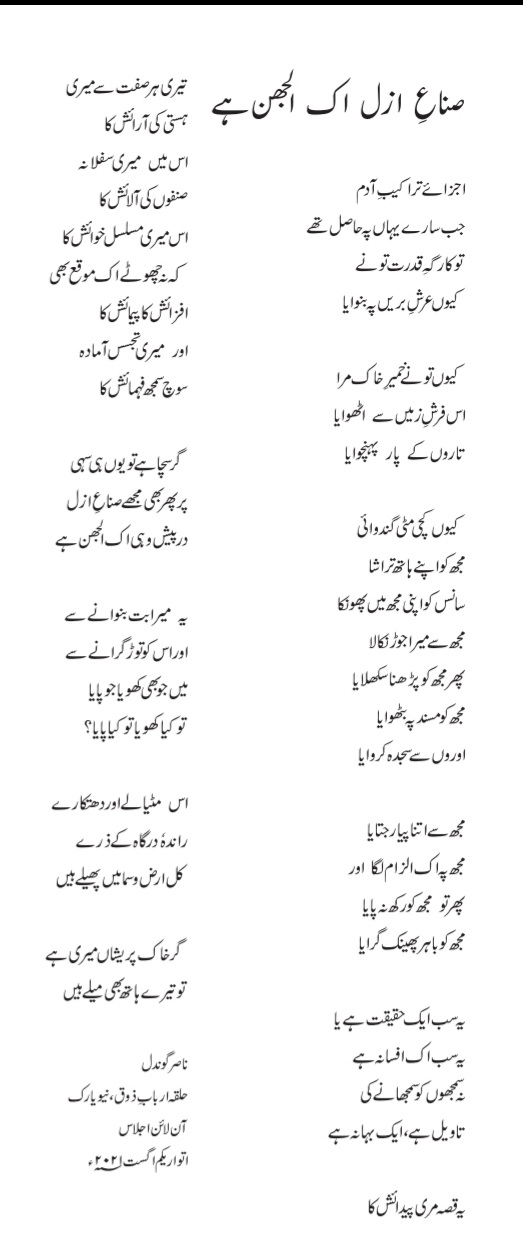
Sanna-e Azal/صناعِ ازل اک الجھن ہے

صناعِ  ازل  اک  الجھن ہے

اجزائے تراکیبِ آدم
جب سارے یہاں پہ حاصل تھے
تو کارگہِ قدرت تو نے
کیوں عرشِ بریں پہ بنوایا

کیوں تو نے خمیرِخاک مرا
اس فرشِ زمیں سے  اٹھوایا
تاروں کے  پار  پہنچوایا

کیوں کچی مٹی گندوائی
مجھ کو اپنے ہاتھ تراشا
سانس کواپنی مجھ میں پھونکا
مجھ سے میرا جوڑ نکالا
پھر مجھ کو پڑھنا سکھلایا
مجھ کو مسند پہ بٹھوایا
اوروں سے سجدہ کروایا

مجھ سے اتنا پیار جتایا
مجھ پہ اک الزام لگا  اور
 پھرتو  مجھ کو رکھ نہ پایا
مجھ کو باہر پھینک گرایا

یہ سب ایک حقیقت ہے یا
یہ سب اک افسانہ ہے
نہ سمجھوں کو سمجھانے کی
تاویل ہے، ایک بہانہ ہے

یہ قصہ مری پیدائش کا
تیری ہر صفت سے میری
ہستی کی آرائش کا 
اس میں  میری سفلانہ
صنفوں کی آلائش کا
اس میری مسلسل خوائش کا
کہ نہ چھوٹے اک موقع بھی
افزائش کا پیمائش کا
اور  میری تجسس آمادہ
سوچ سمجھ فہمائش کا

گر سچا ہے تو یوں ہی سہی
پر پھر بھی مجھے صناعِ ازل
درپیش وہی اک الجھن ہے

یہ  میرا بت بنوانے سے
اور اس کو توڑ گرانے سے
میں جو بھی کھویا جو پایا
تو کیا کھویاتو کیا پایا؟

اس  مٹیالےاور دھتکارے
راندہٗ درگاہ کے ذرے
کل ارض و سما میں پھیلے ہیں

گر خاک پریشاں میری ہے
تو تیرے ہاتھ بھی میلے ہیں

ناصر گوندل
حلقہ اربابِ ذوق، نیو یارک  
آن لائن اجلاس 
 اتوار یکم اگست ۲۰۲۱؁ء


Friday, July 23, 2021

Lines/لین


https://youtu.be/QffP3Nz1xZo


لین

عمر گنوائی  لیناں لگے

اک مکی تے
دوجی لین دے پچھے آن کھلوتے

نکے ساں تے نکیاں لیناں
وڈے ہوئے تے
نال و  نال ای  وڈیاں ہو گیاں لیناں

جد وی مڈھ اپڑناں واں
چوکی بیٹھا
دوجی لین دی پرچی کٹ کے
دوجا  راہ وکھا دیندا اے

فیر میں لینے لگ جاندا واں

ہون وی لین کھلوتا واں
پر کی لین کھلوتا واں؟

اے تے چوکھیاں لیناں پہلے
لین و لین چلا کے مینوں
ایسا بھل بھلیکھا پایا

ہون اینج عادت پے گئی اے کے
لین دے مڈھ  اپڑتے تایئں
اگلی لین دی پرچی پھڑنے
اپنا ہتھ ودھا دیندا  واں

ناصر گوندل
حلقہ ٗ  اربابِ ذوق،  نیو یارک
اتوار  ۱۸ جولائی، ۲۰۲۱


Monday, May 10, 2021

Dil Da Kotha Khali Kar/دل دا کوٹھا خالی کر


دل  دا کوٹھا خالی کر

کھوٹ نہ سُچ پرکھیا  ای
کچرا سانبھ کے رکھیا  ای

حیلے مکر منہ آئی باتاں
تیر کمان نشانے گھاتاں

غرضاں حرصاں ات خمار
فیلیاسوفی سوچ وچار

جند  جوانی کر کے ساڑ
چُکدا  جانیں کوڑ کباڑ

تک تک کے  اِترانا  ایں
دلدل پھسدا جانا  ایں

کیچ کچیلا ہو گیا اے گھر
کوڑا  سُٹ  پوتر کر

ٹاکی مار پچارے لا
بوہے کھول تے دھپ لوا

 نویں  پڑونڑیں  آونا  ایں
سارا کھیڈ مکاوناں ایں

جاگدا  رہ  اڈ یکاں  لا
جو محرم اے او آوے گا

اوس  تیکر رکھوالی  کر
دل  دا کوٹھا خالی کر

ناصر گوندل،
سنگت
اتوار9/مئی2021


Sunday, April 18, 2021

نویں تریخ/New Date


https://youtu.be/_zrofClZlbY


نویں  تریخ


دن تے پورا سالم ہونداے رات کیوں ونڈی جاندی اے

ایدھرے اودھرے اگے پچھے ادھ وچ ٹنگی جاندی اے


ادھی راتی اج دے وچوں کل دا سپ نکلدا اے

گھنٹے چوکھے لگ جاندے نیں جد تک سورج چڑھدا اے


سو جاون جد تھکے ٹُٹے جھٹ ذرا جیا لاون لئی

او ای ویلا چنیاں اے پنچاں نے دن بدلاون لئی


روز ای فجری او ہی دیہاڑی مڑ مڑ لانی پیندی اے

جے دن نوں پرتاوناں اے تے رات جگانی پیندی اے


اوس گھڑی نوں پھڑ نییں سکدے کلیاں راتی جاگن نال

اندر گھنٹا وجدا اے تے تاں ای بندا اے گھڑیال


ناصر گوندل، نیو یارک

اتوار18/اپریل2021