Friday, June 12, 2020

Islamic Philosophy 101 ( Part II of my notes)


Continued from Part 1


COMMENTS ON ISLAMIC PHILOSOPHY BY NASR/ PART II 

ISLAMIC PHILOSOPHY 101

Nasr points out that in Islamic Philosophy, what is said is important and not who said it. Having this in mind. One can try to travel through Islamic Philosophy.

First thing first.

In contrast to the various phases of Western philosophy, from ancient Greeks to the present day, prophecy has the central role in Islamic philosophy.

Apart from a few names, like Ibn Warraq and Zakaria Razi (Latin Razzes) overwhelming Muslim thinkers have not questioned the Divine, but have deliberated on how to reach or recognize the ultimate truth in the Diving Being.

What is Hikmat? Many later theologians, like Fakhruddin Razi, a rationalist himself, equated with Kalam, the philosophers disagreed with that. Kindi said, philosophy is the knowledge of reality of things within the man’s possibility.


DIMENSIONS OF REVELATION

Islamic revelation possesses several dimensions.

Externally it can be looked as shariat, tariqat and haqiqat, (Law, Path and the Truth).

Looking inwards it can be seen as Islam, Iman and Ahsan, ie as either particulars of faith (Submission, Faith and Virtue).


EXISTENCE OR ESSENCE:

The first question to address is the nature of divine. Philosophers spent quite a time this concept. Whether it is the wujood of God, the Existence or presence more important or the Essence, quiddity, Mashai of God.

And later, whether Existence, wujood is depended upon the concept, Mashai or vice versa.

The question of existence and essence, wujood and mahiyah is the most basic in Islamic philosophy. Peripatetic view is that existence is actualized out of essence. This question has been addressed by all the philosophers, many Sufis and Mutakalemeen.

The first questions a scholar has to address: Is it? what is it? and later a third one, why is it? First is related to wujood and second to mahiyah.

Many concepts are related to the root wjd: wujood, wajd, wijdan, mojood, wajibul wajood (God) and the concept of wahdatal wujood.

The difference between Aristotelian and Avicennan thought:

According to Aristotle world cannot not exist. In Islamic thought, there is an ontological poverty faqr in the world that it cannot exist without the Divine Being. So, the wujood is given by God.

Wujood and mahiyah are intertwined. They are not separate from one another, but are not the same thing.


SINA’S ‘THE THREE DIRECTIONS” (Necessity, Possibility and Impossibility)

Sina introduced the essential question, The Three directions. Aljaht al salasa:

 To differentiate between Necessity, Possibility and Impossibility, wujub, mumkin and mumtina.

Wajib is what cannot not exit.

Mumkin be what can exit and may not exist.

Mumtina is what cannot exist.

Every possible situation has to be analyzed through these questions.

Example of wajib would be the Zaat e Elahi, the Divine Essence, who is wajibul wajood.

Rest of the world be the Aalim e mumkinat, which can or cannot exist.

One example of mumtina would be a Partner of God. Shirk al Bari


Three Principles of Sadral Din Shirazi, Mulla Sadra’s metaphysics.


1.Transcendent Unity of Being. Wahdat al wujood.

Although contested by exoteric Ulema and bewilderingly misunderstood by Western orientalists, this is the dominant concept in Islamic philosophy. It is however interpreted in more than one way, as whether it means no one else except God has existence and hence all existence is part of Being, or God (Wujood al Mutlaq) is the source of everything that appears to possess wujood. Moreover, it is not for public consumption and is only reserved for spiritual and intellectual elite, khawass.  It is not achieved by ratiocination, Bahs, but by tasting, Zouq.

The term itself was first used by Andulusian Ibn Sabin, expanded by Ibne Arabi and fully defined by Mullah Sidra, Sadr alDin Shirazi.

Main opponent was Ibne Taymiyyah. In India Shaikh Sirhindi introduced the concept of Wahdat al Shahood in parallel to it.


2. Maratib al Wujood. Hierarchy of Being. The concept of gradation, Tashkik, was introduced by Aristotle and expanded by Ibne Sina. There is a hierarchy in the universe, stretching from the Materia prima through minerals, vegetable, animal kingdom to man, angelic realms and ultimately to God. This concept was further given a new meaning by Mullah Sidra in his transcendent theosophy. From floor, Farsh to Arsh, Divine Throne, there is a gradation and each grade is the reflection of divine light and its intensity.


3. Principality of Wujood, Asal at al wujood: Islamic philosophy gradually shifted from the principality of Essence, Mahiyah by Sina and Suhurwardi to the principality of Wujood, by Mullah Sidra.


Structure of Reality/Wujood. External reality is experienced by man and conceptualized as Reality and its Essence. And then there can be various stages of reality and there are different opinions in various schools of philosophy. Asharite refused to accept these differences and later school of Mulla Sadra made clear distinction.

How to avoid identifying world with God. There are three stages. Negatively conditioned. Bi sharte la, is without any condition attached to is that is the Divine Reality. Non conditioned, la bi shart, is the most expansive mode of wujood , where it can be determined in various forms. It is like an act of existentiation like breath of the Compassionate, nafas al Rehman. And then it is the Conditioned by something, Bi Shart e shay, is the actual level of wujood in the existents.

Here Sufis and Isma’ili thinkers differ from later philosophers that the former don’t consider God to be a part of any of these stages. That Absolute Being cannot be conditioned in any way even by the condition of being negatively conditioned.


Distinction between the concept and reality of wujood. (mafhum and haqiqat): In Western philosophy existence may merely be an abstraction. In major Islamic thought, it has to be manifest.


Experience of Wujood. That is one of the major differences between classical Islamic Philosophy and West. Here the experience of transcending from individual sense of being to the Reality of Being cannot be achieved without inner dimension. It cannot be experienced with intellect alone. That brings Islamic philosophy integrated to spirituality.

The ordinary man is usually aware of the container, whereas the sage sees the content that is at once being, wujood, presence huzur and witness shuhud.


How one knows?  A basic question. Three stages.

In Islamic intellectual perspective prophecy is an integral part of this question.

It starts with Burhan, demonstration, related to faculty of reason and intellect. Then one moves up to Irfan, gnosis, associated with inner intellect, or intuition and illumination and then ultimately to Quran, related to prophetic function.

The journey from reason to intellect, or intuition is from istadlaal (reflection of intellect upon the plane of human mind) to firasat. Other terms used for it are zouq, ishraq, mukashaf, basirat, nazar and badiha.  This journey from reason to intellect cannot be achieved without faith.

In Kalaam, esp Asharite, the basic use of intellect is to understand the Will of God. It is not interested in the Truth and Knowledge aspect of Divinity. It is true for its founder Abul Hasan Aashari. Later Ghazali and Fakhruddin Razi, the mutakhareen, modified it a bit , but it remained in this domain.

On the other hand in other schools of Kalaam , like Mutazilla and Shia Kalaam there was a greater role of reason in understanding the Will of God. Still the function of kalaam was to find rational means to protect faith, Imaan.


NEXT: Kalaam


Sunday, June 7, 2020

Islamic Philosophy by Nasr/ An Overview

Islamic Philosophy by Nasr


COMMENTS ON ISLAMIC PHILISOPHY by NASR

PART I


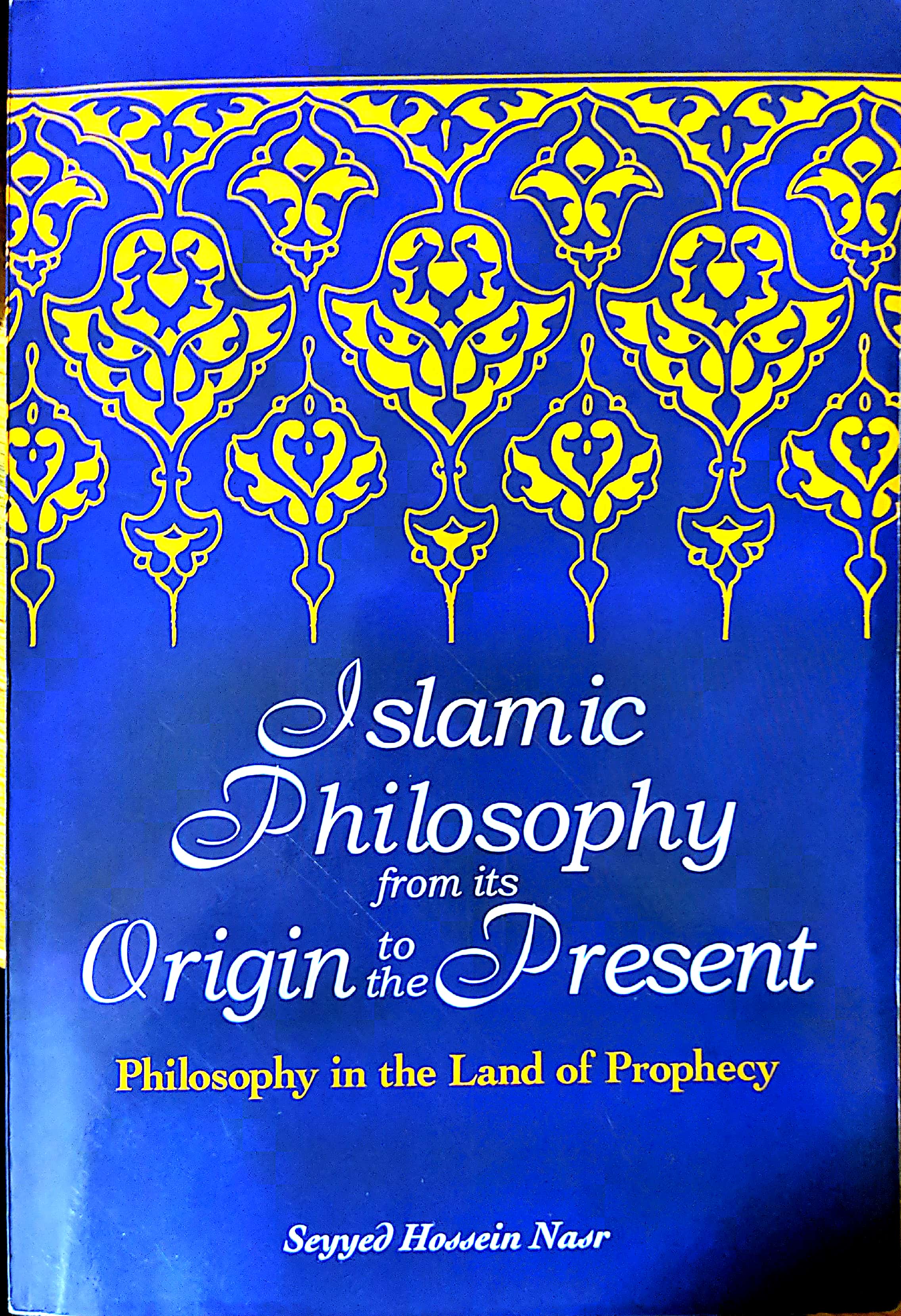
This post is first in a series of posts regarding Islamic Philosophy. It is basically my synopsis of the first seven chapters of Seyyed Hossein Nasr’s “Islamic Philosophy from its Origin to the Present”

Growing up, and even now while getting old, when I hear about thought leaders in Islam, it is a short list. Either one thinks of the scholars of the four schools of jurisprudence, fiqh, like Abu Hunifa, Malik, Shafi and Ahmed bin Hambal; or we are told of the Sufis, poets or otherwise, their different Sufi orders, their founders and followers, throughout the length and breadth of Islamic World, from Seville to Baghdad to Bukhara to Ajmer and beyond. On a more cerebral level, one hears of Mu’tazila, Aasharites,  Ghazali, Ibne Taymiyyah, Ibn Arabi and Ibn Rushd.  At times one hears about a quotation of Sina or Razi.  Then sometimes the mention of Rumi and Razi in Iqbal’s poetry. I heard all these names but never had the chance to read them or about them.

This inadequate knowledge base leads to confusion at times. For example, until recently I did not realize that the physician Razi, (Zakaria Razi) after whom the Razi Hall, a residence hall in Nishtar Medical College is named, is a different person that the Razi (Fakhruddin Razi). Although both were Persian physicians and philosophers, they were three centuries apart and their thought processes were even further divergent.

Often all these names and their disciplines are mixed up and hard to sort them oud and give some order.

Nasr’s book helped me bridge that gap. It is published by State University of New York Press in 2006. For those who know the son more than the father, he is father of Vali Nasr.

What I write here is my interpretation of some of the chapters of it and in no way, it claims the intended opinion of the author. To those well read into it, it may all sound very naïve and elementary. My apologies for that in advance.

There is a lot of redundancy in the book and same topics and individuals are discussed multiple times through different angles. I, for my own sake, have tried to reorganize my notes to simplify it for me. What follows is derived from the first half of the book. That is where the gist of the subject is discussed in essence. The later half of the book is basically a catalogue of names for the various centuries in the later half of Islamic history. It does not go deep in the philosophical issues and is thus more of a compilation of history.


ISLAMIC PHILISOPHY, AN OVERVIEW


Basically, it is neither theology, nor mysticism. It is the third discipline.

There are theologians in the first place. Names we learnt most are theologians; the four fiqh orders, Ilme usul, their founders and prominent followers. Later there were more differences. Both Mu’tazila and Aashari are part of this line, collectively called Kalaam, ( ilm e kalam) and persons are called mutakalemeen. Although Mu’tazila were more ‘rational’ amongst the two in thinking but the main emphasis was on the theology, ie on how to practice the religion and the elements of faith.

Then there were mystics, Sufis, all those famous names who sought the inner dimension and a path to the Divine.

And then, there is a third line of order, the thinkers, hukuma, and philosophers of Islam. We, at least I, NEVER learnt about them while growing up. We learnt about some of them in passing, but mostly for their other contributions, to science and medicine, and not to the field of philosophy.

Yes, at some level, many of them may not be strictly boxed in as either philosophers, theologians or sufis. Many a time, they crossed the boundaries and were larger than what one discipline could define them.

According to Nasr, although the general concept of philosophy includes sufism, kalaam, usul and some of other Islamic sciences as well, over all they lie outside the boundary of falsafah or hikmat in Islam.


THREE PHASES OF ISLAMIC PHILOSOPHY:

One can divide the Islamic Philosophy historically into three phases. First is Peripatetic, Aristotelian or Ma’shai, followed by Illuminationist or Isharqi and then the “transcendent theosophy”.

First phase: The first one, Peripatetic is the one mostly based on reason and intellect. Also called Hikmate Bahsia, Argumentative or Discursive philosophy.  It had an early and a late period.  The first one in this series is Yaqoob al Kindi, in the 3rd Hijri, followed by Farabi and then Abu Ali Sina, both in the fourth century hijri.  Kindi’s main concern was discovery of truth, wherever it may be found and one should not be ashamed of it. Farabi is considered as the Second Teacher, mualam e sani, Aristotle being the First Teacher.

Sina is the ultimate philosopher in Islam, and his influence on later thinkers is more than anyone else. He elaborated the growth of reason from a basic intelligence of bil quwwat, and gradually with increasing intellect, it moves to habitual intelligence, bil malaka, to actual intellect bil fa’l and then finally to acquired intelligence mustafaz. Above all stands Divine Active Intellect aql al fa’al which illuminates the mind.

Sina, thus, made more of a distinction between the reason and intellect., which has an inner dimension and opened the road to the next phase of Islamic philosophy the Illuminationist.

Ibne Rushd, Zakariah Razi and Tusi can be included in this group as philosophers of Later Peripatetic period.

Second phase: The Illuminationist, ishraqi, also called Hikmate Zoqia, Intuitive or ‘tasted’ philosophy, is what makes more of a connection between the intellect and the inner self. It emphasizes that one cannot reach the truth though intellect and reason unless one tastes it, ie there has to be a spiritual element in it. Its main proponent was Shahabudin Yahya bin Habash Suhurwardi (nothing to do with the Sufi order of the same name). He integrated Platonic, Neoplatonic philosophy and ancient Persian wisdom esp Mazdaean angelology and Avicennian philosophy with gnosis. He was executed in Aleppo at a young age of 37.

It was during this phase in history that his contemporary, Ibne Arabi introduced the concept of Wahdat al wujood, although the actual term was first used by Ibne Sabin, another Andalusian. Ibne Arabi focused on Divine Essence Al zaat and theophany, tajalli

Third Phase: The third phase is the Transcendent theosophy, alhikmat al muta’aliya, championed by Mulla Sidra. This is the state of Ifran, gnosis. And it is as close to Sufi mysticism as philosophy can be.  His three principles of metaphysics are described later in a subsequent part


OPPOSITION TO ISLAMIC PHILOSOPHY FROM WITHIN ISLAM:

The main opposition to the field of philosophy came from three quarters, the theologians. Mutakalimeen, the Aasharites, and the sufis.

FIRST: Theologians, the followers of Kalaam , thought that falsafa is outside the domain of Islamic sphere where the main emphasis should be to preserve the transmitted sciences on the exoteric level. They refused to be concerned with the intellectual or the esoteric dimension of Islam. Most prominent example is Ibn Taymiyyah in Sunnis and Mullah Baqir in Shias.

SECOND: Most of the Asharites and some of Mutazilla were opposed to the falsafa. This interplay, which was heightened by Ghazzali ended up changing both falsafa and kalaam. Much of the later kalam was itself influenced by Falsafa.

THIRD: Opposition by the Sufis is more complicated. One line of mysticism is a step ladder approach, and this path helps man reach divine through rationalization and istadlaal.  Practitioners of this path like ibne Arabi were themselves considered philosophers, Plato of the day. Etc. The other line calls for a complete breakup with ratiocination of reason to reach the divine, Examples being Rumi and Sanai.

With time the philosophy or Hikmat receded into background but by that time it had deeply influenced various aspects of Islamic life, creating an atmosphere of rational thought which influenced fields as diverse as grammar, rhetoric, collection of hadith, organizing economic activity in bazaar to mathematics and geometry and architecture.

At one time during Saljuqs in Persia, the Nizamuddin School declared all subjects of falsafa to be banned in the curriculum and only kalaam to be studied.


FIVE PERIODS OF RELATIONSHIP BETWEEN FALSAFA AND KALAAM

First. In the early peripatetic period, the 3RD HijrI. It was a period of Falsafa vs Mu’tazila. There were differences but some element of mutual respect. Esp Al Kindi.

Second was from 3rd to 5th Hijri, where the dominant kalam school was Asharite and there was a fierce difference culminating with the accent of Ghazali on the scene and his denunciation of falsafah. This is the time most studied in the West.

Third is the time from 5th to 7th century Hijri, where both converged somewhat. Although during this time, which included Ghazali and later Fakhruddin Razi, there was still a fierce opposition of both but by the end of this time, kalam became more philosophical and falsafa delved more into the subjects of prophecy and Divine Will, topics of interest to kalam

This was the time of rise of Seljuks in Persia, who favored the kalaam approach over hikmat and falsafa. Only philosopher of note in in that time is Omer Khayyam

Fourth, from 7th to 10th hijri is the time of illuminationist philosophy, ishraqi, and there were more convergence. Many of the individuals can be classified as both philosophers and mutakalimeen.

Fifth is from 10th to modern times where one may see more convergence, esp in Shia kalam which is quite philosophical. In Sunni world, esp in India the hikmat e ilahiya flourished, examples being Shah Waliullah of Delhi and Ali Ashraf Thanwi

Overall, the philosophers always thought that although topics covered by kalam are important, the tools mukatalemeen utilize are inadequate. According to Mulla Sidra, one of the foremost philosophers of the last period, they do not have purity of thought and heart, and they are after worldly glory.


NEXT:Islamic Philosophy 101


Monday, June 1, 2020

Ghazal/Terey Ghar Ka Pata Naheen Bhoola


غزل

تیرے گھر کا پتہ نہیں بھولا
سدرۃ المنتہیٰ نہیں بھولا

کاش اک دن یہ کہہ سکوں میں بھی
مجھ کو میرا خدا نہیں بھولا

وہ سکھی ہے تونگری میں جو
شدتِ ابتلا نہیں بھولا

جاتے جاتے پلٹتی نظروں سے
وہ تیرا دیکھنا نہیں بھول

دوش اپنا رہا نہ یاد مجھے
پھر بھی میں آپ کا نہیں بھولا

منزلوں کا مغالطہ بھی ہے
میں فقط راستہ نہیں بھولا

چونکہ اپنا تھا فایٔدہ اس میں
اس لیٔے آپ کا نہیں بھولا

یاد رکھنا جسے اذیّت تھی
میں وہی واقعہ نہیں بھولا

ایسے لگتا تھا بھول جائے گا
ہے عجب ماجرہ نہیں بھولا

عدلِ گم گشتہ کو خبر کر دو
بے زباں دیکھنا نہیں بھولا

ناصر گوندل
حلقہِ اربابِ ذوق، نیو یارک
آن لایٔن اجلاس
اتوار،۳۱ مئی، ۲۰۲۰؁ء


Sunday, May 10, 2020

Shahidaan e Corona


شہیدانِ کرونا


شہیدانِ جنگِ بلائے کرونا
تمہاری خطا ہے
کہ تم کو زمانے کی طاقت تریں 
قوتوں کی پناہ ہے

کوئی لڑکے دیکھے
تو مہلک تریں،آتشیں

اسلحے کا جواباً  اسے سامنا ہے
مگر اب یہاں پر جو دشمن بنا ہے
وہ پنہاں ہے ایسے 
کہ ویسے تو وہ سانس کے درمیاں ہے
بظاہر عیاں ہے
مگر وہ نہاں ہے

Monday, May 4, 2020

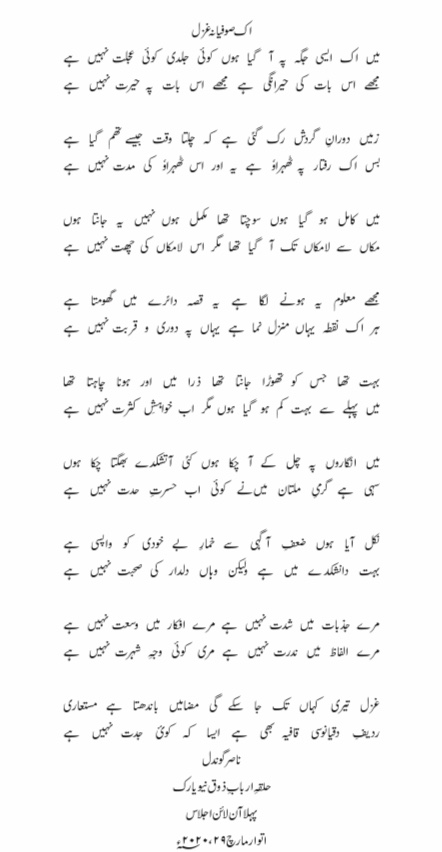
اک صوفیانہ غزل/Ghazal


 اک صوفیانہ غزل
میں اک ایسی جگہ پہ آ گیا ہوں کوئی جلدی کوئی عجلت نہیں ہے
مجھے اس بات کی حیرانگی ہے مجھے اس بات پہ حیرت نہیں ہے

زمیں دورانِ گردش رک گئی ہے کہ چلتا وقت جیسے تھم گیا ہے
بس اک رفتار پہ ٹھہراوٗ ہے یہ اور اس ٹھہراوٗ کی مدت نہیں ہے

میں کامل ہو گیا ہوں سوچتا تھا مکمل ہوں نہیں یہ جانتا ہوں
مکاں سے لامکاں تک آ گیا تھا مگر اس لامکاں کی چھت نہیں ہے

مجھے معلوم یہ ہونے لگا ہے یہ قصہ دائرے میں گھومتا ہے
ہر اک نقطہ یہاں منزل نما ہے یہاں پہ دوری و قربت نہیں ہے

بہت تھا جس کو تھوڑا جانتا تھا ذرا میں اور ہونا چاہتا تھا
میں پہلے سے بہت کم ہو گیا ہوں مگر اب خواہشِ کثرت نہیں ہے

میں انگاروں پہ چل کے آ چکا ہوں کئی آتشکدے بھگتا چکا ہوں
سہی ہے گرمیِ ملتان میں نے کوئی اب حسرتِ حدت نہیں ہے

نکل آیا ہوں ضعفِ آگہی سے خمارِ بے خودی کو واپسی ہے
بہت دانشکدے میں ہے ولیکن وہاں دلدار کی صحبت نہیں ہے

مرے جذبات میں شدت نہیں ہے مرے افکار میں وسعت نہیں ہے
مرے الفاظ میں ندرت نہیں ہے مری کوئی وجہِ شہرت نہیں ہے

غزل تیری کہاں تک جا سکے گی مضامیں باندھتا ہے مستعاری
ردیفِ دقیانوسی قافیہ بھی ہے ایسا کہ کوئ جدت نہیں ہے
ناصر گوندل
حلقہِ اربابِ ذوق نیو یارک
پہلا آن لائن اجلاس
اتوار مارچ ۲۹، ۲۰۲۰ء؁


Sunday, April 26, 2020

Corona kay Dulhey


کرونا کے دولہے


ہر اک گھر میں ڈر کے مقید ہو ا ہے
گلی میں ہے رقصاں ہلاکت کی دیوی
گھنی خامشی میں 
ابھرتی ہوئی سایٗرن کی صدایئں
وہ صورِ سرافیل ایسے اٹھایئں
کہ باراتِ ماتم
کرونا کے دولہوں کو بیمار گھر میں
فریبِ شفا کی دلہنیا ملانے
چلے جا رہی ہے

جہاں منتظر ہیں
معالج پرستار
نرسیں معاون
کفن کو لپیٹے ہوئے یہ مسیحا
بخاطر مدارت
کرونا کے دولہوں کو ہاتھوں میں لیں گے

دلوں کی ہو دھڑکن تپش ہو بدن کی
اکھڑتا ہوا سانس چہرے کی رنگت
رگوں کا تناوٗ نظر کا بہاوٗ
علاماتِ کل کا حسابِ مکمل
بتائے گا سطحِ مدارات کیا ہو

نقابِ دہن ہو ہا ٹیکوں کے گجرے
لہو سے بھری بوتلوں کی سبیلیں
مشینوں کی رہٹی میں دم کا ہنڈولا
یا طفلی دلاسہ

ہر اک طرح ان کا سواگت کریں گے
انہیں سانس لینے کی امید دیں گے

جہاں رشتہِ خوں بوجہِ ہزاراں
ہوا منقطع سرحدِ ہسپتالاں
رہے گا وہ مہماں یہاں پہ اکیلا
یہی اس کے خادم یہی اس کا کنبہ
گر اپنوں سے ان کے کوئی بات ہو گی
انہیں کے وسیلے ملاقات ہو گی
یہی رابطے کا مسبب بنیں گے
یہی ٹیلی فون آپریٹر بنیں گے

یہ اولادِ مریم
مسیحانِ حاظر
جلا دے نہ پایئں متاثر زدوں کو
مگر پھر بھی مایوس ہونے نہ دیں گے

جو بیمار گاہ سے روانہ ہیںشہرِ خموشاں کی جانب
کوئی ان کا اپنا
انہیں بوسہِ الوداع ثبت کرنے
کو ناں آ سکے گا

یہی طب قبیلہ انہیں وقتِ آخر
حضر  کے کواڑوں سے
ر خصت کرے گا

مسیحانِ امروز ایسے بھی ہیں جو
کئی اپنے ہاتھوں میں میخیں گڑائے
صلیبوں کو اپنے ہی کندھے اٹھائے
اسی قافلے کا ہراول بنیں ہیں

کرونا کے دولہوںکی باراتِ ماتم
جو بیمارخانے سے ملکِ عدم کو
چلے جا رہی ہے


ناصر گوندل
حلقہِ اربابِ ذوق  نیو یارک
آن لایئن اجلاس
اتوار  ۲۶ اپریل ۲۰۲۰ ؁ء
۳ رمضان  ۱۴۴۱؁ھ